Memory
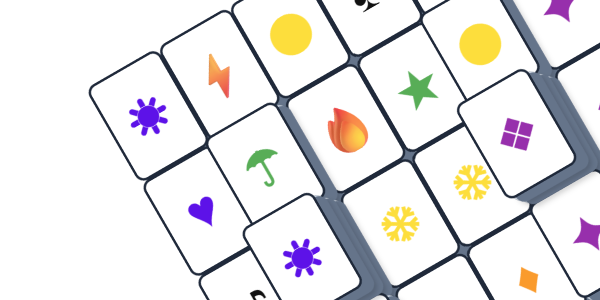
Flip tactile 3D cards and pair every symbol in the fewest moves possible. A crisp, invigorating boost for working memory and concentration.
How to Play in 3 Simple Steps
Master the rules in seconds—designed for intuitive touch and mouse control.
Flip Any Two Cards
Tap two face-down cards to reveal their hidden symbols and colors.
Build a Mental Coordinate Map
If the symbols match, the pair clears with a green pulse. If not, memorize their exact grid positions before they flip back.
Clear All Pairs Smoothly
Use each new flip to match previously seen cards until the entire board is cleared.
Cognitive & Brain Training Benefits
How regular sessions of this puzzle strengthen specific neural pathways and executive functions.
Hippocampal Spatial Binding
Linking an abstract symbol to a specific X/Y grid coordinate directly exercises visuospatial sketchpad memory.
Sustained Selective Attention
Prevents mind-wandering by rewarding continuous observation across every turn.
Rapid Memory Updating
Dynamically updating which positions are cleared vs. active strengthens cognitive flexibility.
Pro Strategies & Deduction Tips
Techniques used by experienced solvers to clear boards faster and maintain long streaks.